Autopsy-report cover-up
Dead ShotThe Autopsy-report cover-up is the coordinated falsification and suppression of medical evidence surrounding the deaths of three Statenville high-school athletes within a twenty-four-hour period. Its decisive act is the conversion of violent, unexplained deaths into a convenient story about methamphetamine overdoses. The cover-up does not erase the victims’ bodies; instead, it places an official document over them, attempting to make institutional language more authoritative than physical evidence. Later findings show that the deaths were connected to markers added to methamphetamine, and that the marker had been engineered to become fatal, making the suppressed autopsy evidence central to the novel’s exposure of Statenville’s corrupt information system.
Physical Evidence and the Contradictory Deaths
The first challenge to the official account comes from the victims themselves. Cody Murray’s death begins with an itch that rapidly becomes uncontrollable: red welts spread across his arms, chest, and back, and his scratching intensifies the pain rather than relieving it. He runs outside and presses his body against an Aspen tree, jamming his fingernails into his chest and rubbing his back against the bark. The episode is not presented as a normal overdose but as a bodily catastrophe that drives the victim into increasingly violent self-injury.
Kevin Mendoza’s examination of Cody’s corpse confirms that the visible damage cannot be explained by the town’s mountain-lion rumor. The wounds cover the torso, legs, arms, and face, with no clear section of the body left untouched; their long slashes look like claw or scratch marks made by someone at close range. Yet the decisive clue lies beneath the fingernails. Scraped-off skin is compacted under them, indicating that the wounds were self-inflicted rather than produced by a feline predator. Cody’s body, which Cal Murphy recognizes from his reporting on Cody’s football and baseball seasons, retains enough identity to be recognized while being so mutilated that the familiar athlete is barely recognizable.
Kevin’s preliminary medical judgment is that all three boys scratched themselves to death. In formal medical language, the cause would be exsanguination: the victims scratched with such force and persistence that they severed several major arteries and bled to death. The extraordinary mechanism matters because it resists every easy public explanation. The bodies suggest a specific physiological process, while rumor suggests an animal attack and the local authorities later impose a drug-overdose narrative. The conflict is therefore not between knowledge and ignorance alone, but between competing authorities claiming the right to name what happened.
The Manufacture of the Official Account
The cover-up becomes explicit when an unidentified caller asks Kevin what he found. Kevin initially explains that the victims’ deaths cannot yet be attributed to drugs because the toxicology screens have not been completed and that the scratching, not an overdose, is what ultimately killed them. The caller orders him to state that the boys overdosed and to cancel the tests. Kevin understands the instruction and acknowledges it, even though he is not pleased to cooperate.
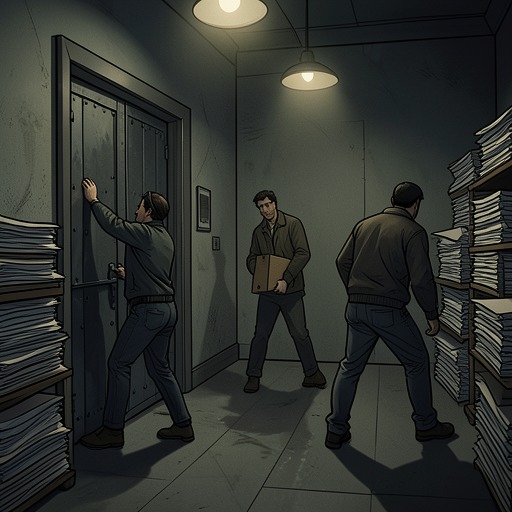
Kevin’s compliance is tied to his political self-interest. The narrative states that he believes cooperation makes sense if he is to be re-elected in the fall. His decision transforms the autopsy process from an inquiry into a managed administrative performance: he places the original report at the bottom of his clipboard, writes a replacement report for the Sheriff’s Department and the media, and preserves the first version only for his own private curiosity. The evidence is not destroyed, but its public status is changed. One report becomes the official truth; the other becomes a hidden document that may still contain the case’s real meaning.
He then sends a short email to the laboratory in Boise canceling the toxicology screens of the victims’ blood. This action closes off the testing that might have established how the victims were poisoned and ensures that the false overdose account will not immediately face laboratory contradiction. The cover-up is nearly complete at the moment Kelly Mendoza calls for him down the hall, creating a sharp contrast between the ordinary sound of family communication and the concealed alteration of three death investigations.
Institutional Pressure and Information Control
The falsified reports function within a broader campaign to restrict inquiry. Sheriff Jones tells Cal Murphy and Kelly Mendoza that the third victim was Devin Reid, Jim Reid’s son, but insists that all three died from a simple drug overdose and objects to the reporters’ use of the word murder. He concedes that three deaths in a twenty-four-hour period appear suspicious, yet redirects suspicion toward the supposed need for evidence and claims that such evidence already supports the official account.
The newspaper becomes another point of control. Guy Thompson first sends Cal to the sheriff’s office to obtain information, instructing him to report back and to keep Kelly with him for photographs. Once Cal begins pursuing the deaths more seriously, Guy orders him to write only a reaction piece. That assignment reduces journalism to collecting public responses rather than investigating the underlying event, and it threatens to replace evidence with managed opinion. Cal’s investigation is thus obstructed both by law enforcement’s medical fiction and by editorial authority within The Register.
Joseph Mendoza reinforces the pressure by claiming that nobody in Statenville wants to know anything beyond funeral arrangements and where to send flowers. The statement converts public silence into apparent consent. Cal’s skepticism reveals the mechanism: if the community is told that the deaths are overdoses and is discouraged from examining the bodies, records, or circumstances, then the absence of protest can be presented as proof that no deeper investigation is wanted. The cover-up therefore depends not only on a false report but also on controlling the range of questions that can be asked.
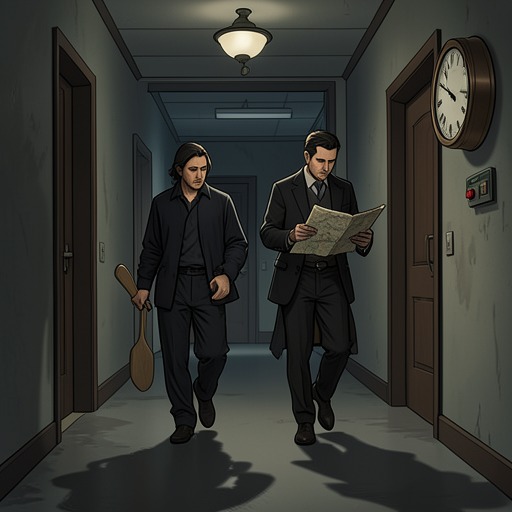
Cal later receives a warning letter telling him to keep quiet about the previous night’s events and to create a cover story. The anonymous writers call him an important ally while threatening other forms of persuasion if he refuses. They promise that the truth could place him in the national spotlight, but demand that he tell neither Kelly nor Guy. The threat exposes the same logic used by the medical falsification: information is offered selectively, delayed, and attached to consequences designed to make silence appear safer than publication.
The Federal Explanation and Aftermath
The cover-up is eventually overturned by an independent examination conducted by Federal Bureau of Investigation officials. The later account published under Cal Murphy’s name explains that the student-athletes had not simply overdosed on methamphetamine. Their deaths were caused by markers with which the meth had been laced. The markers were intended to produce what looked like the sudden onset of a rare disease, thereby alerting the Centers for Disease Control and Prevention and the Federal Bureau of Investigation while allowing deep-cover agents to track the reach of the drug network.
The intended marker was not supposed to kill anyone. A rogue FBI agent altered the additive so that it forced liver bile into the bloodstream rapidly, producing uncontrollable itching beneath the skin. Because the victims were already high from methamphetamine, each responded to the sensation by scratching with fatal intensity. This explanation joins the medical evidence to the larger criminal and intelligence plot: the scratches were real, the itching was chemically induced, and the false overdose report concealed not merely a local crime but the dangerous failure of an undercover operation.
The consequences extend beyond the three deaths. The victims had been presented to Statenville residents as student-athletes who overdosed, while local law-enforcement officials pressured the coroner’s office to release falsified reports. Later federal findings reveal that the official account protected the town’s reputation and concealed the operation’s deadly deviation from its intended design. One victim was Riley Gold, Nathan Gold’s son, adding a personal connection between the deaths and the power structure that chose to dismiss them as coincidence.
Significance of the Cover-up
The Autopsy-report cover-up is significant because it makes the struggle over evidence visible at every level: the body records the truth through welts, gouged wounds, severed arteries, and skin beneath fingernails; the medical report translates that truth into either exsanguination or a false overdose; the laboratory is prevented from testing the blood; journalists are pressured to produce a safer story; and federal investigators later restore the suppressed causal chain. The body acts as a silent witness, but the institutions surrounding it attempt to speak on its behalf.
The action also shows how corruption operates through ordinary decisions rather than only spectacular violence. Kevin Mendoza does not merely receive an order; he alters paperwork, shelves his original assessment, cancels the Boise laboratory tests, and prepares a version suitable for official and media circulation. Sheriff Jones repeats the overdose explanation, Joseph Mendoza invokes community preference, and Guy Thompson narrows the newspaper’s assignment. Each decision limits what can become publicly knowable.
When Cal Murphy’s story appears in two newspapers the next day, the suppressed evidence finally enters a wider public record. Publication does not make the earlier falsification disappear, nor does it restore the victims’ lives. It does, however, reverse the cover-up’s central operation: the deaths can no longer be contained within the language of coincidence and overdose. The Autopsy-report cover-up consequently stands as both a plot mechanism and a statement about power—the authority to control a death begins with the authority to control its name, but the physical evidence can eventually force that name to change.